
How RF Connector Components Impact Performance
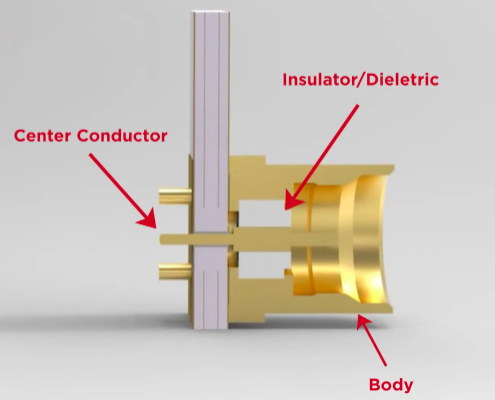
RF connector performance depends on more than just size and interface type. The internal construction of each connector plays a critical role in signal integrity, mechanical stability, and long-term reliability.
Every RF connector is made up of three primary elements. The body serves as the outer conductor and shielding, protecting the signal from external interference while providing the mechanical mating interface. The insulator, or dielectric, maintains precise spacing between conductors to control impedance and minimize signal loss. The center conductor works with the outer conductor to carry the RF signal and directly influences frequency capability and durability.
In a recent blog, SV Microwave breaks down the anatomy of an RF connector and explains how material choices, plating options, and dielectric design affect electrical and mechanical performance. The article also highlights how specialized constructions support high-temperature solder reflow and harsh-environment applications.
Read the full blog: “Anatomy of a Connector.”